

Daggerheart is a fantasy tabletop RPG by Critical Role’s Darrington Press, designed to be easy for newcomers. It uses a card-based system for classes, abilities, and heritage, but you don’t actually need physical cards. All character info can be written on a character sheet, online with Demiplane, or printed out if you prefer.
Daggerheart provides a wealth of resources on their downloads page here: https://www.daggerheart.com/downloads/
Steps to Character Creation

- Pick your class and find your Class Guide & Sheet –
- Character Sheets/Guides – https://www.daggerheart.com/wp-content/uploads/2025/05/Character-Sheets-and-Guides-Daggerheart-May212025.pdf
- Classes List & Details with artwork – https://app.demiplane.com/nexus/daggerheart/classes?srsltid=AfmBOoopSXicdUBRBeEA7V3ZohTFr_NUxShcoVfQUVfnBZ9YhtBGVD2q
- Choose your ancestry & community; what is your species and where are you from?
- Assign Trait Scores. Assign these modifiers to your Agility, Strength, Finesse, Instinct, Presence, Knowledge: – +2, +1, +1, +0, +0, and –1
- Enter your Vital Stats as they’re described in your guide: HP, Evasion, Armor Score, Damage Threshold, 2 Hope, 6 Stress
- Fill in your Starting Inventory outlined in your guide. Every class gets a torch, 50 feet of rope, basic supplies, a handful of gold, plus one Minor Health Potion or Minor Stamina Potion (your choice; 1d4 HP or Stress)
- Background & Connections: Detail history of your character & How they connect to the other players.
- Define 2 Experiences – Examples – https://daggerheart.fandom.com/wiki/Experience(examples) – Experiences are your +2 bonus to rolls made during gameplay when the situation can call upon your past.
- Domains – Pick 2 Total – https://app.demiplane.com/nexus/daggerheart/domains – Each Class has 2 Domains which are the categories for each classes spells & abilities. Pick a total of 2, which can be a combination of 1 from each or 2 in one.
Step-by-Step Character Creation

1. Choose a Class (and Subclass): Pick one of Daggerheart’s fantasy classes that suits your playstyle. There are nine classes in the core set where each class comes with a unique class feature and access to two Domains of abilities. At level 1 you also choose a Subclass (sometimes called a Foundation) which further specializes your character. Take the class’s character sheet and the subclass card (or note their details) – these will list any starting abilities (including a special “Hope feature” tied to the game’s Hope mechanic). Example: If you choose Bard, you’d grab the Bard sheet and pick one of its two subclasses, getting the features listed for that choice.
2. Choose a Heritage (Ancestry & Community): Your Heritage defines who your character is and where they come from. It has two parts: an Ancestry (species/lineage) and a Community (the culture or environment they grew up in). For example, you might choose an Elf ancestry and a Wildborne community – this combination gives your character certain traits or features from both. There are many options (Human, Dwarf, Orc, Faerie, etc. ancestries and several “-borne” communities like Loreborne, Seaborne, etc.). Each ancestry grants two special ancestry features, and each community grants one feature. Write these down on your sheet (they’re often provided on cards, but writing them works just as well). You can even mix ancestries if you want (for instance, half-orc/half-goblin) by taking one feature from each of two ancestries, but that’s an advanced option.

3. Assign Your Six Traits: Every Daggerheart character has six core traits that represent their physical, mental, and social aptitudes: Agility, Strength, Finesse, Instinct, Presence, and Knowledge.
Think of these like familiar RPG stats (Agility for quickness, Strength for might, Finesse for dexterity/precision, Instinct for perception and survival sense, Presence for charisma/leadership, and Knowledge for intellect). At character creation, you get a preset spread of modifiers to assign: +2, +1, +1, +0, +0, and –1. In other words, one trait will be your best (+2), two traits get a small boost (+1 each), two stay average (0), and one is slightly weak (–1). Decide which trait gets which value based on your character concept. (For example, a nimble rogue might put +2 in Agility, while a scholarly wizard might put +2 in Knowledge.) Fill in those modifiers on your character sheet.
4.Fill in Level and Vital Stats: All new characters start at Level 1, so mark that on your sheet.
- Your class description will tell you your starting Hit Points (HP) and Evasion score – record those as well. Evasion is like your defense target number – enemies have to roll against it to hit you.
- Each class also has a starting Armor Score (how many hits your armor can absorb) and Damage Thresholds from whatever armor you’ll wear – we’ll set those when choosing equipment in the next step, but know that your level affects them (level is added to your armor’s thresholds).
- Every character also begins with 6 Stress slots (think of this as your capacity for mental strain and fatigue) and 2 Hope points (a resource for special moves). Mark down “Stress 6” (all slots empty for now) and “Hope 2” on the sheet. (Don’t worry too much about what Stress and Hope do yet, just note the starting amounts. We’ll briefly explain these in the mechanics section below.)
6. Choose Starting Equipment (Weapons & Armor): Now decide on your initial gear.
- First, pick your weapon(s). The choices will be limited to basic gear – for example, a Warrior might start with a greatsword (two-handed) or a sword and shield. Your weapon entry on the sheet will list the damage dice it deals and which trait you use to attack with it.
- Next, choose a suit of armor from the starting armors list (like leather armor, chain, etc.). Armor in Daggerheart has two important numbers called Base Damage Thresholds (often shown as two numbers, e.g. “5/11”) and an Armor Score. Write those down: when you put on the armor, add your level (1) to each threshold and note the total, and note the Armor Score in the shield icon on your sheet. (These thresholds help determine how much damage you take from hits – more on that below – and Armor Score is basically how many hits your armor can protect you from before it’s used up.)
- Finally, record your starting inventory items. By default, every character begins with some adventuring gear: a torch, 50 feet of rope, basic supplies, a handful of gold, plus one Minor Health Potion or Minor Stamina Potion (your choice). Your class may also list a unique item or two (for example, a spellcaster decides what they carry their spells in – a book, a wand, etc.). Make sure to add those to your inventory.
- At level 1, your Proficiency is 1 (meaning you roll one damage die with your attacks), which is already accounted for in the basic weapon damage listed.
7. Create Your Background: Now for the fun part – your character’s story. The character sheet (or guide) provides a few background questions to flesh out who your hero is and what shaped them. These are prompts like “Who taught you to fight and why did they stay behind when you left home?” or “What personal tragedy set you on this path?” Answering these will give you and the Game Master a better idea of your character’s history and motivations. You can use the suggested questions or make up your own. Write a few quick answers down – just enough to inspire roleplay. This step has no mechanical effect on your stats, so feel free to be creative or keep it simple. (If you’re not sure, you can even skip detailing the backstory now and discover it through play, which is totally okay.)
8. Define Two Experiences: Experiences in Daggerheart are a unique character feature – think of them as free-form proficiencies, talents, or life experiences your character has. You get to create two of them at character creation. An Experience is just a short phrase or descriptor like “Skilled Blacksmith”, “Streetwise”, “Natural Leader” or “Light on My Feet” – anything that describes an area of specialty or personality quirk that could aid you. You then assign each a +2 modifier. During play, you can spend Hope to add one of these Experience’s +2 bonus to a relevant roll (for example, adding “Skilled Blacksmith +2” when trying to mend a broken blade). There’s no fixed list of Experiences, but the rule is they shouldn’t be too broad or too “magical” on their own. So something like “Strong” or “Lucky” is too general, and something like “Can Turn Invisible” is not allowed. Pick two that sound fun and fitting for your character’s background, and write them with +2 next to each. (If you need inspiration, the official guide provides many examples like Backgrounds (e.g. Ex-Pirate, Village Healer), Personality Traits (Stubborn, Charming), Skills (Tracker, Bargainer), etc.)

9. Select Two Domain Cards (Abilities/Spells): Each class in Daggerheart has access to two thematic Domains – basically categories of abilities and spells that class can learn. For example, a Ranger might have the domains Wild and Blade, a Wizard might have Arcana and Elemental, etc.
As a level 1 character, you get to choose two abilities from your class’s domains (these come as Domain cards in the physical game). You can take one from each domain or even two from the same domain – it’s up to you. Each chosen Domain card is essentially a special move, attack, or spell your character knows starting out. Look at your class’s domain list (it’s on your character sheet or guide) and pick two level-1 abilities that sound exciting. For instance, a Rogue with domains Shadow and Blade might take a stealth attack from Blade and a sneaky trick from Shadow.
Note: If you’re not using the actual cards, just write the names and effects of these abilities on your sheet for reference. (And don’t worry if another player picks an ability from the same domain – you can both have it, you might just share the card or note it separately.)
10. Establish Connections with Your Party: Finally, Daggerheart encourages players to link their characters’ stories together with Connections. During Session Zero or before the first adventure, take turns with the other players to propose how your characters might know or trust each other. The character guide provides prompts for this too – e.g. “What lie have you told me about yourself that I absolutely believe?” or “Why did I grab your hand when we first faced danger?”. Go around the table and share a quick intro of your character (name, pronouns, a bit of their background), then see if any connection ideas spark. Aim to agree on at least one connection with each other character – perhaps you’re childhood friends, former rivals turned allies, or you swore an oath to protect another PC’s family. If an idea doesn’t fit, any player can veto a suggested connection, and it’s okay if not everyone is tied together yet. The goal is just to start the game with some relationships in place, so the party feels like a team.
Party Bonds: Brining PCs Together
That’s it – your character is ready to play! 🎉 You should now have a Level 1 Daggerheart adventurer with a class, subclass, heritage, trait bonuses, gear, a bit of backstory, personal experiences, and connections to others. In play, you’ll bring all these elements together as you roll dice and tell an epic story with your group.
Before we wrap up, let’s briefly go over a few key Daggerheart mechanics that we hinted at during character creation (Hope, Stress, Duality Dice, etc.), so you know what they mean when you start playing.
Key Daggerheart Mechanics (A Quick Overview)
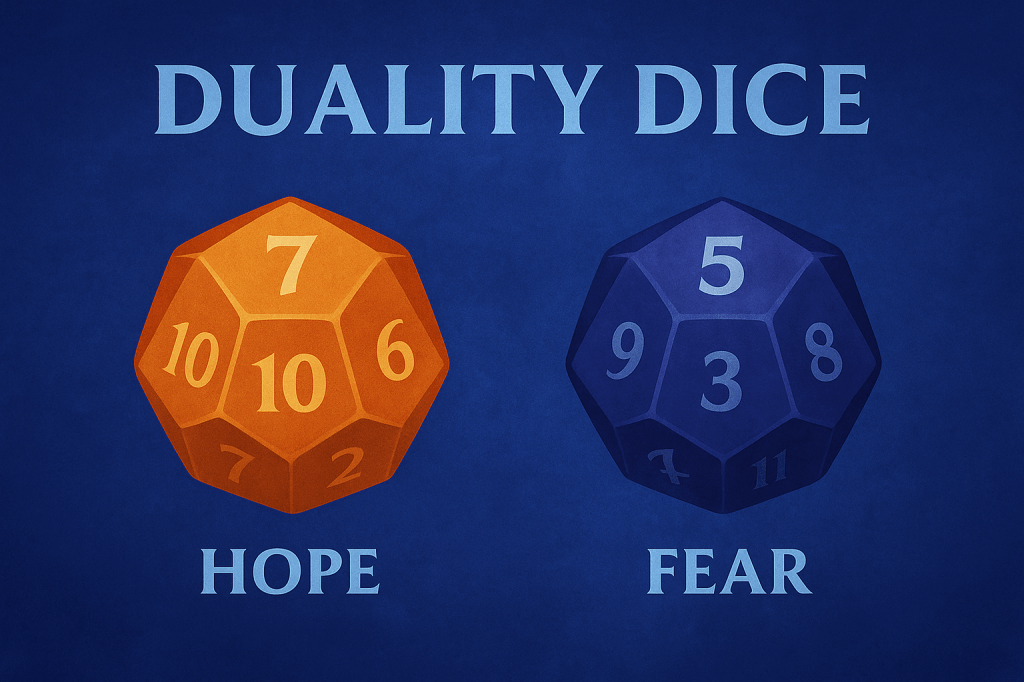
- Duality Dice (Hope & Fear) Daggerheart uses a distinctive dice system for actions. Whenever you attempt something challenging, you roll two 12-sided dice – one Hope die and one Fear die. You add them together (plus any trait or situational modifiers) to see if you meet the difficulty. However, the twist is which die is higher can matter. If the Hope die rolls higher, your action not only succeeds (if the total meets the difficulty) but you also gain a Hope token as a little boost of good fortune. If the Fear die is higher, the action might still succeed on the total, but some complication or negative twist happens (the game master might get a Fear token to spend on making your life interesting!). And if both dice come up the same number (doubles), that’s a critical success – you do amazingly well, gain a Hope, and even clear some Stress. This Hope/Fear dynamic adds a fun narrative push-pull to every roll.
- Hope is a resource for heroes – think of it like your character’s positivity, determination, or luck. You start with 2 Hope and can carry a maximum of 6 at a time. You earn Hope mainly through rolling well (when your Hope die wins or on critical doubles) and possibly other class features. What do you do with Hope? You spend it to activate special benefits. For example, you can spend 1 Hope to help an ally, giving them an extra d6 on their roll. Or spend 2 Hope to help yourself on a roll (essentially an extra push). You also spend a Hope to add one of your Experience bonuses to a roll. Certain classes have a unique Hope feature – a powerful move fueled by Hope (like a Bard’s rallying cry or a Sorcerer’s burst of magic). Hope tokens carry over between sessions and serve as a currency for these heroic feats. Use them wisely, and they’ll get you out of tough scrapes!
- Stress represents your character’s mental strain, fatigue, or minor injuries – basically the wear and tear that doesn’t directly cut into your HP. Everyone has 6 Stress slots to start. Various things in the game can cause you to mark Stress: maybe resisting a fear effect, pushing yourself physically, or certain enemy abilities. Think of it like a tracker for how close you are to burning out. If you ever run out of empty Stress slots (i.e. you have 6/6 Stress marked) and something would give you another Stress, that overflow turns into real harm – you’ll have to mark a Hit Point instead. The good news is you can recover Stress with rest or by using abilities (for example, a Stamina Potion clears some Stress, and one use of a Rally Die can clear stress equal to the roll). Managing Stress is important for survival: if your Stress is low, it means you’re composed and ready; if it’s maxed, you’re on the brink of collapse until you find relief. In gameplay terms, it adds tension as your hero faces fearsome challenges.

- Armor & Damage Thresholds Daggerheart handles damage in a unique way. Instead of a flat reduction or massive hit point pools, your armor provides Damage Thresholds that determine how serious an incoming hit is. Each armor has two threshold numbers (after adding your level) – for example, you might have thresholds 5/11. When you take a hit, compare the damage rolled to those numbers. If the damage is less than or equal to the first number, it’s a Minor wound and you only lose 1 Hit Point. If the damage is higher than the first but up to the second number, it’s a Major wound costing 2 Hit Points. If the damage exceeds the second threshold, that’s a Severe hit and costs 3 Hit Points. Essentially, good armor raises those thresholds, meaning many attacks will only graze you (minor) instead of seriously hurting you. Additionally, your armor’s Armor Score (the shield icon value) tells how many times you can use the armor to absorb or lessen damage.
- Whenever you’re hit, you have the option to mark off one armor slot (reduce your armor’s durability by 1) to reduce the damage severity by one level. For example, if an attack would be Major (2 HP), you can expend an armor use to make it Minor (1 HP) instead. This way, armor can “take the hit” for you a limited number of times. Just remember to repair or replace armor that has used up all its slots!
- And lastly, your Evasion score works with this system by determining if an enemy hits you at all – if an enemy’s attack roll is below your Evasion, they miss entirely. But if they do hit, that’s when your armor and thresholds come into play to blunt the blow.
- Darrington Press – Daggerheart System Reference Document (May 2025), “Character Creation” steps and game rules
- Daggerheart Official FAQ – Intro to Daggerheart and card system.
- Daggerheart Character Sheets & Guides (May 2025) – Class-specific starting gear and traits (Bard example).
- Get Your Sheet Together – Critical Role’s how-to-play video series (May 2025), character creation episode.
- Community summaries (Daggerheart.org) – Rules overview for duality dice and actions.
- Daggerheart GM Guide – Explanation of armor, damage thresholds, Hope, and Stress mechanics.
- Sources and Pemissions:
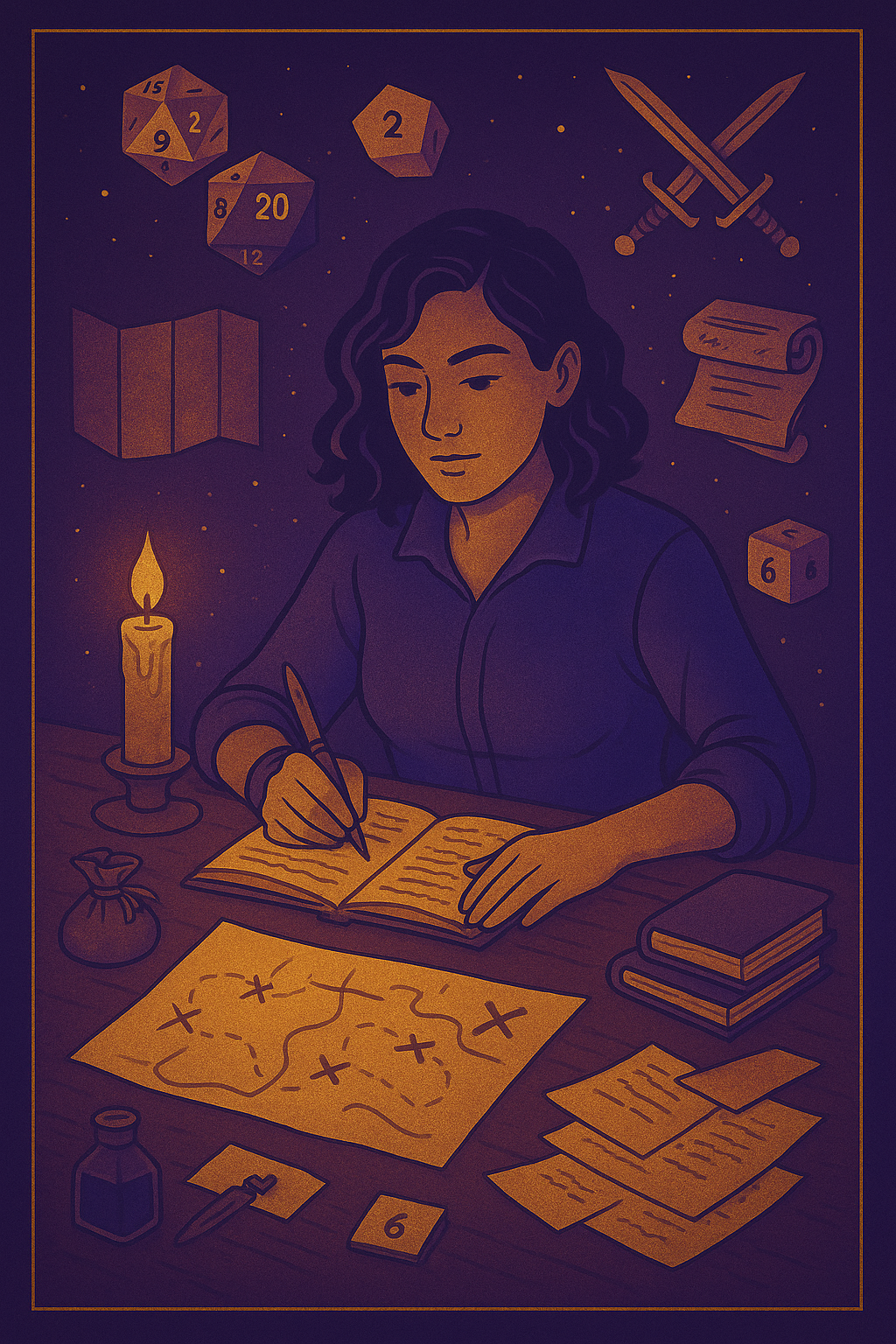
- Artwork in this article created and owned by MymsWell – Michael K.
- Additional MymsWell graphic designs commissioned by Trina Ylanan: https://www.instagram.com/d3ltari/

 Mym's Well
Leave a comment